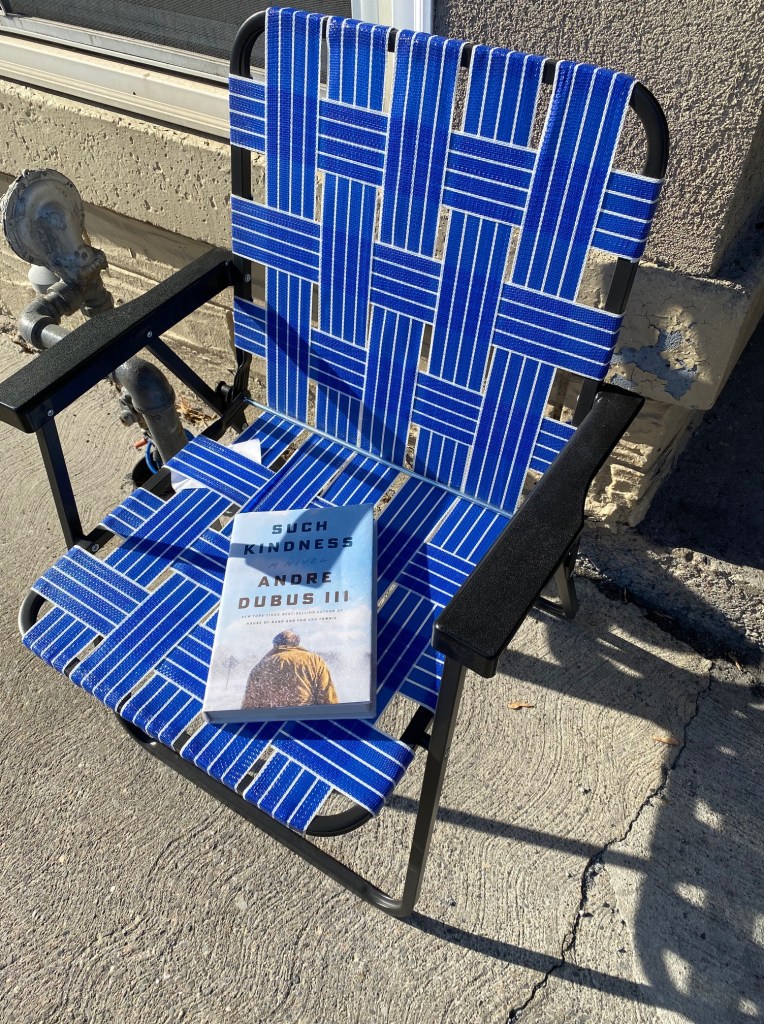
On sunny days, three seasons of the year, I like to read outside my apartment. Sometimes passersby nod in my direction, and sometimes they’ll say something to me. “You’ve the perfect reading light,” a friendly woman said to me one particularly sunshiny afternoon. It may have been Spring.
“Ah, yes. I do, indeed,” I said, and smiled, tickled by the idea that the sun was the ideal reading lamp. Also, it was nice of the woman to share such good cheer, I thought. Not everyone does.
In fact, if people say anything to me, most often they grumble. In fairness, there’s a lot to grumble about, so that’s okay. I tend to listen, patiently, nodding my head. Because, on occasion, we all need someone to hear our grumbling, I think.
Illustration by Grace Marshall
There’s no place to park in this downtown, people frequently say to me. Or they’ll gripe about getting a parking ticket; or all the eruptions in the sidewalk. Geez, you’d think the City would fix this, they’ll say, with all the money they rake in from stupid parking tickets.
My most common response to that? True.
But then — almost by habit, it seems, and almost without fail — I’ll add something jokey, or a little more pleasant. If someone complains about the weather, for instance, which happens a lot (if it’s cloudy or cold or super windy, say), I’ll look up at the sky and then say, “Well, it ain’t rainin’ frogs. So one good thing, I guess.”
This usually earns me a smile, sometimes a laugh.
One day it occurred to me that I say that a lot. One good thing. Because, really, there always seems to be some good thing, no matter the calamity. And so, when it came time for me to give this blog a name, One Good Thing came to mind.
The blog’s focus is on book reviews. And the thing about most every book, I have come to believe, is that there’s always something good to be said about them — yes, even the ones that aren’t as dazzling as you’d thought they’d be. The duds. The disappointments. The ones you end up donating to the library’s used book sale. And yes, even the books you found so friggin’ annoying you tossed them across the room.
Maybe it’s just the font, or the pretty cover art, or a fine first sentence that caught your fancy. I’m tellin’ ya, as a writer, an avid reader, and a former bookseller, there’s always one good thing to be said any book.
A quick for instance: Fifty Shades of Grey. Arguably one of the most terribly written books in decades, I was selling so many copies of that novel at my little bookshop in Perth, it was madness — a madness that really helped pay the bills.
I’d heard horrible things about the writing. Still, I was curious. And on a slow afternoon in the shop, I picked up one of the books (the whole trilogy was out then), opened it to a random page, and started reading. I read some cheesy dialogue, as I recall, and then these two words: “she mewled.” And yeah … I tossed the brand new book gently across my bookshop. Why? Because nobody mewls. It just doesn’t happen.
Fairly sure I said that aloud, too, to myself.
The tiny kitten mewled for its mother. Sure, that’s fine. That happens.
But: “I want you right here,” she mewled — or whatever the heck it was … no. Nope. Never. No thanks.
Another day in the shop a guy came in to browse and we got talking about those books. They were stacked, like, everywhere. Impossible not to notice. “I can’t keep them in stock,” I said. “It’s sort of silly, really. Because they really are not very well written.”
And this guy’s wise response I remember vividly: “Well,” he said, “at least people are reading.”
Which caught me off guard a moment. Then I said, “Hmmm. Yeah. That’s true. One good thing, eh.”
“Yep,” he agreed.
So maybe that’s where it all started. I don’t know. But you get the idea.
And so, needlessly long story short, that’s how this little blog happened upon its name.
~ ~ ~ ~ ~ ~
I’ve got big plans for this blog. But as some of you may know, I’ve had a rough winter. Some major health issues have me on the Injured Reserve list.
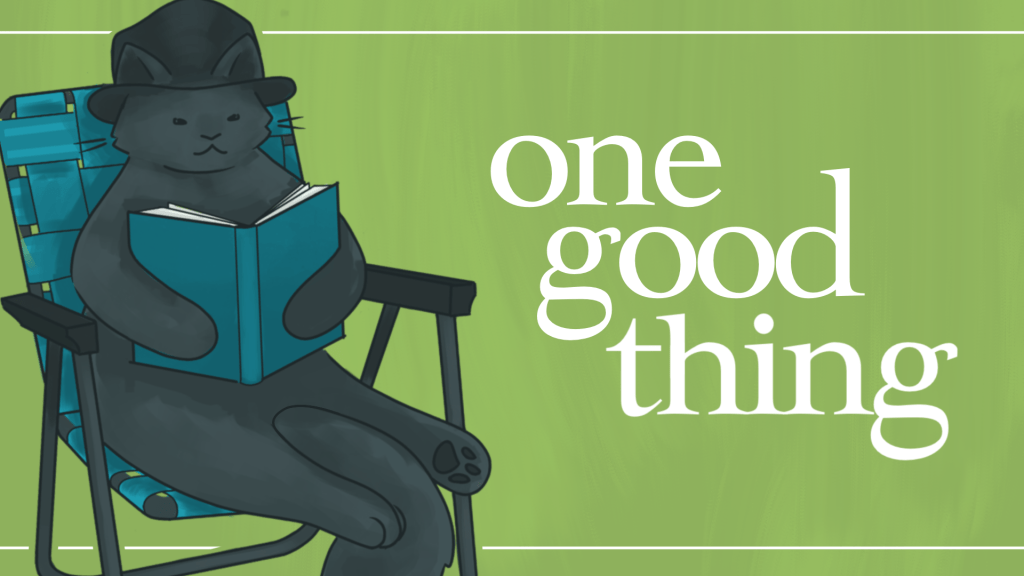
Still, there’s some good news — we have a banner!!!
The immensely charming illustration is the delightful creation of Grace Marshall, a talented young artist from Kitchener, Ontario. I could not be happier with Grace’s work.
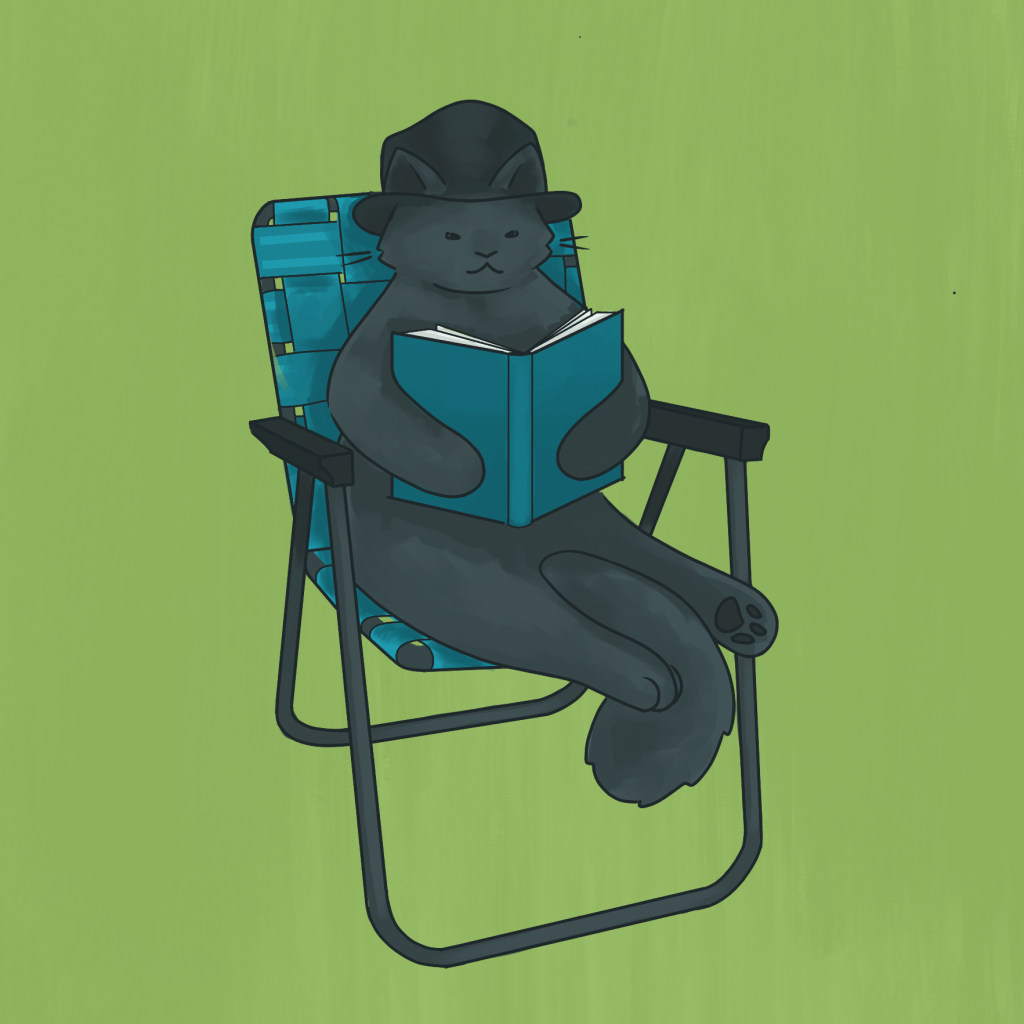
Julian. Illustration by Grace Marshall.
The handsome cat in the lawn chair is named Julian, I’ve decided. He is fondly named after Julian Barnes, a favourite author of mine, who may or may not sit on old fashioned lawn chairs and wear cool hats, but most certainly reads books, and likely plenty of them.
I hope you delight in Julian as much as I do. He just looks so calm and cool and completely immersed in his book, well, it’s enviable, really, isn’t it?
“Julian, would you like to join us at the pub later on?”
“Oh, well,” he might say, after a time, carefully marking his page. “In a bit, perhaps. I’ve a few chapters to go.”
We all know what that’s like. When you’re rapt in a brilliant book, the pub can wait. Dinner can wait. Showering can wait. Everything can damn well wait.
~ ~ ~ ~ ~ ~
I haven’t posted a review here since early December. Unfortunately, I’ve been unable to sit up long enough to write much. I’ve been reading during my winter respite, though. I read a few pages at a time, then need to rest. With the pain I’m experiencing, it’s been difficult to focus. It’s also fatiguing.
But books have helped. (In arduous times, books always seem to help.) I’ve stacks of them near the bed I’ve got set up in my parents’ downstairs. I’ve been fickle, reading one then another, and then yet another, and then something entirely different. Novels, memoirs, poetry collections, writing reference books, even style manuals.
I can’t yet share a review of it but I recommend Janet Malcolm’s memoir Still Pictures, which contains sentences and passages so wise and beautifully written I’ve read them with tears in my eyes. It’s a wise and generous book, and she was an exceptional writer. I’ve wanted to tell a friend, “You can always count on a skilled photographer to describe life so luminously.”
When warmer weather comes, I hope to get back to my apartment. And when I do, health permitting, I’ll set up my lawn chair outside my door and read this one straight though. Can’t wait. I’ll be as content as Julian looks.
Movies have more than helped me pass the time this winter, too — they have entertained, delighted, made me cry, and like a small stack of favourite books, felt at times like loyal friends.
Sticking to gentle films, really, since pain tends to make one irritable — at least, that’s what they tell me … well, no, I’ve been mighty irritable at times. And gentle films have soothed my rather frayed and restless nerves.
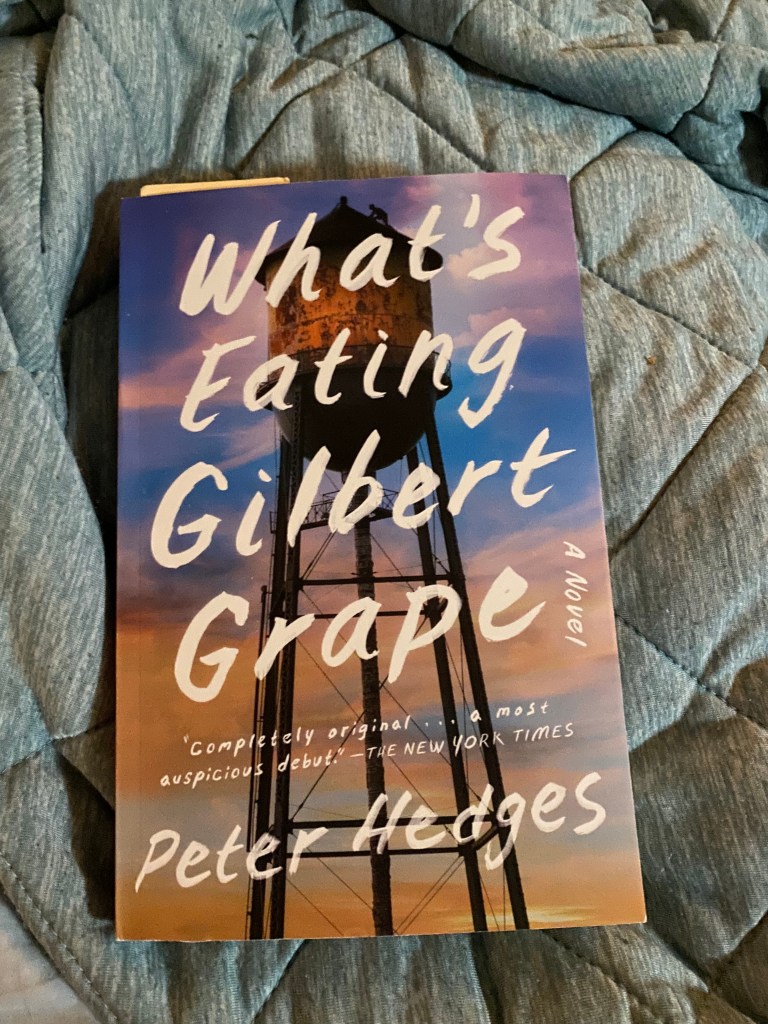
The other night I watched Dan In Real Life, a movie I’d forgotten I enjoyed thoroughly way back when. It was funny and charming and just what I needed. I’d also forgotten that it was directed by Peter Hedges, who wrote the novel What’s Eating Gilbert Grape, a paperback I devoured and adored years ago (in 1991, I think), and so that one’s up next for me.
If you haven’t read that one, you should — especially if you liked the film, because Hedges adapted his book to the screen.
“It’s really cool.” — Booklist.
Kidding. From memory, that’d be my review.
So … I hope you like Julian! And I do hope to be back reviewing books and blogging about them soon.
Meantime, thanks for reading. That’s a nice sort of “welcome back.”
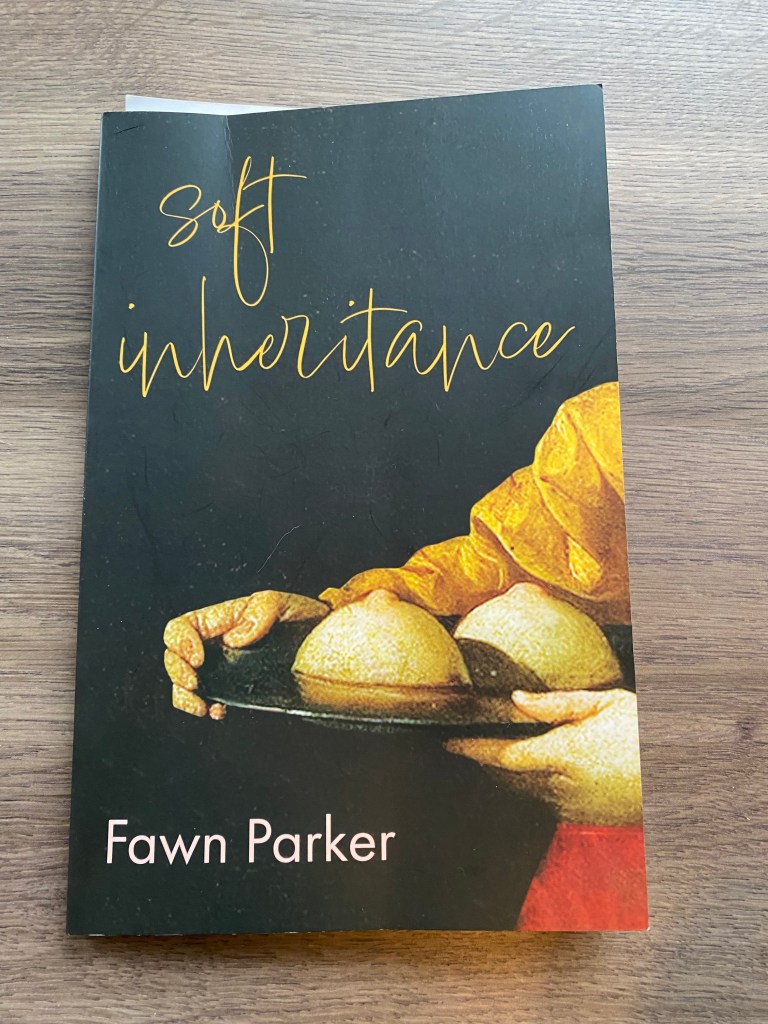
Soft Inheritance by Fawn Parker. Published by Palimpsest Press, 2023.
When I first read Fawn Parker’s Soft Inheritance, I was spellbound. I also felt slightly uneasy. Enthusiastically, I took notes. Then I read the book again. Once more, I was enthralled and discomforted, but this time I could say why, on a fairly basic level, at least — I was mesmerized by the beauty of the language in these poems, and I was deeply moved by the book’s tough and tender moments.
I sat with the book a while, reading snippets on my front step, trying to figure out its appeal. Because it did appeal. But it was also disquieting.
Then something came to me: Parker’s meditations on grief reminded me of C.S. Lewis’s in A Grief Observed — a book I’ve read a shameless number of times — in the sense that Parker’s poems often come across as difficult, eloquent confessions. Like letters from the land of grief. Letters written with raw honesty, uneasiness, and uncertainty. The uneasiness in these pages is electrifying and palpable.
For instance: “I am lonely and the thought / of others makes me sick,” the narrator of “Poem Against My Husband” admits, “at least in the mornings. / By night I’m in need again.”
Lewis wrote extensively about the loneliness of grief. (“There is a sort of invisible blanket between the world and me,” he wrote. “I find it hard to take in what anyone says. Or perhaps, want to take in.”) Parker touches on this too, in a similarly sincere and unapologetic tone. The feelings she expresses are instantly recognizable. Her honesty — her vulnerability — easily earn our trust.
Neatly, a bit playfully, the poem ends: “My work needs me like an infant — / this is why we understand each other.”
Parker wrote some of these poems when her mother was diagnosed with cancer. Others were written after her mother’s death. During that time, everything in Parker’s life was changing, bewildering, and painful, and these poems reflect that. When C.S. Lewis was shaken by the death of his wife, he wrote that he was surprised he could still work and write with ease. In her grief, Parker embraces a comparable conclusion: like an infant (a striking comparison, I think, given the context) needs tending to, so too does the narrator’s work. I love that these lines are open to multiple interpretations. That, I believe, takes skill and courage. It also acts as an exhilarating invitation to the reader. Is this what allows her to move forward? one might fairly ask.
The poem “Abracadabra” is just as dazzling and wise. “There were times you didn’t understand: / goodness is a scar,” it begins. Then comes a powerful middle stanza whose narrator is world-weary and distrustful, feels lost and unheard, and, in the end, unworthy: “We laugh until we twist / in horror and withdraw. / If you go to the party there will be someone there / who takes its out of you. / You want something from the party, / but the party is a beast / and you are speaking to some part of it / that isn’t its ear.”
The poem sadly concludes: “I am not a person deserving of a word / like light.”
Those last two lines linger hauntingly. Parker seems well aware that grief is, at times, a “beast” that can make you feel weak and worthless.
In the next poem, “Animal of Choice,” the speaker is in a sorrowful state where: “My friends are useless and it’s not their fault.” Also: “Things feel frivolous.” And the narrator can’t remember the “proper way” to pray. Grief does these things to people. Parker is sensitive to note them. She’s paying attention.
Throughout this collection, there’s a sense that Parker is trying to absorb and understand what’s happened to her and those around her. Life is cruel, hard and beautiful, she’s all but crying out, and not everything makes sense. The title poem “Soft Inheritance” encapsulates these feelings strikingly: “You’ve forgotten again: / kindness is a scar / though not all scar-makers are kind.”
These lines, as catchy as the lyrics of a very good pop song, stopped me in my tracks. Instead of trying to decode them, I let them shower over me. I liked the melodic rhythm of the verse; the words sounded lovely — and they felt quite true. To me, the sequence is so spectacular it feels important. And perhaps it is.
Not all scar-makers are kind.
You’d never guess this was Parker’s debut collection of poems.
In the poem “What Are We Here For,” she reflects on the guilt that often accompanies illness and grief: “Did I use up her / breath? / Repeating and repeating / her words to myself, / in my notebooks.”
The pause and a subtle line break here are perfect, powerfully evoking the strain of someone gasping for air. And the sentiment is stirring in its expression of guilt.
In the poem’s closing lines, Parker movingly captures the claustrophobia of illness and how it can make a home feel like something else: “The house is a hospital / a single room / an open cage / a staircase.” That a house can be both a hospital and an open cage is poetic and disorienting, as are many of the poems in this outstanding book.
Near the halfway point in Soft Inheritance, after Parker’s mother has died, she turns her attention to how we think and act when our loved ones are gone. In “Going Shopping,” after she comes across an entry in her mother’s journals that gives her pause, she laments: “Now that you are gone / I cannot learn from my mistakes, / be a good daughter. / Straighten the back, emote / in appropriate contexts. / Lately I don’t say a word.”
Parker’s mindful of the many sorrows that can shadow you in this state of “after” — the silent burdens we carry; how we try to please the dead.
The lines that follow are elegant and stirring: “At the funeral service / I read something old, / unaffected and academic / to everyone / you’ve ever known. / In this way I succeed / in being recognizable to you / should there be something / you-like in the air around the cemetery.”
Grief complicates our relationships. It also changes the way we see and think about our loved ones. Parker writes about these complications deftly in poems like “Ghost,” and “That Famous Night,” in which she reflects: “There are so many people / a person can be.” She begins looking at material objects differently, too — as “something more / than I’d had when I left / mourning already / that I’d have to leave it / behind.”
This strand of pre-mourning threads itself sympathetically through many of the poems in the final third of the book, including a poem that struck me as the most beautiful in the collection: “Their Shells Get Bleached By The Sun.” With exquisite imagery and rapturous language, the poem profoundly explores the complexities of grief. It left me gasping.
“I watch ladybugs crawl circles around the pane / the ones still red,” Parker writes, “and look only at the window, / never through / afraid of what I might see, / in place of what I want.”
Finally, in the poem’s closing lines, the ladybugs might be memories, or perhaps potential lovers: “They collect in the sills / and their shells are bleached by the sun. / I said I’d never kill them / but there are so many now that I do.”
If I were at a reading by Fawn Parker, my great hope would be that she would read this poem. That would be a sumptuous treat.
Near the end of the book comes “Goodbye to New York” — a fascinating take on how we grieve, and a good reminder that Fawn Parker is a talented novelist; the poem tells a good story. In it, she writes about how a man writes to her and says he mourns his wife only in fragments: “‘The issue is that this is the best you can do,’ / He said, describing his current work, / the work of grieving in smaller and smaller doses. / He said you don’t forget, you just / think more and more of other things, too.” And how true is it that? It’s interesting, too, I thought, that a man writes to explain this to her.
The book ends with another beguiling poem, “A Cover Over Everything.” This one is about relationships. Like a first snowfall, it’s gentle and dreamlike: “I’d rushed inside / to tell you that a bird fell out of the sky / and landed in the mouth of my shovel.” Momentum builds, charged by intimate details that feel like secrets, until the poem surges into a breathtaking ending — “I shed / the mess of bedding and went outside / in your sweater and boots, worked at the snow / until the bird fell. I figured the thing / was dead, or if not would somehow disappear / on its own. I couldn’t stand the thought / of trying and failing to save it.”
Loved ones who’ve died, people we love but only at a distance. Grief breaks us a little, in many ways, so that we eventually come to feel a fear so delicate it leaves us trepidatious if not helpless. Again and again, Soft Inheritance imparts this fragile feeling with astonishing sensitivity and power. Fawn Parker proves herself a skilled poet. Her first collection is a keen, generous, radiant work of art.
My mom is the kindest person I’ve ever known. Every November, she’ll say to me, “I don’t want anything for my birthday. I don’t need anything.” She says this about Christmas too. And it never works.
Not with me. Because I like to give my mom nice gifts. Things she wouldn’t dream of buying for herself, but things I know she’ll like and appreciate.
Pink is her favourite colour. In recent years — and I’m not sure when this started — she’s taken to wearing lots of pink clothing: jackets, toques, scarves, socks, slippers. And so when I saw a pair of lovely pink gloves at Smith Army Surplus on one of my downtown strolls last week, I bought them straightaway. Plus a GORP energy bar.
They were displayed on the cash counter, is why, and I was reminded of some super nutritious food mentioned by one of the characters in Anne Tyler’s The Accidental Tourist. (It’s amusing to me how our favourite books seem to kind of follow us around.) Gardening one day, Rose tells her sister-in-law says she’s worried about “the boys.” The boys being her brothers, whom she’s always taken care of, in one way or another, in their parents’ ancestral home. But now that she’s moved out of the house, Rose says she’s worried because they’re eating something called “Gorp” for supper. She describes the ingredients, and I don’t recall them precisely but Gorp was something like a blend of healthy seeds and nuts and so on, somehow fashioned into a meal — one that tastes like wet chewy cardboard, likely. And so! — yes, of course, I had to treat my mom to a packet of GORP. The one with cocoa, flax, and almond. People eat these for energy while hiking or camping, or some such. And Mom walks a lot — sometimes 90 minutes a day, or three laps of their subdivision, where she knows practically everybody as well as their cats and dogs and the people they talk about.
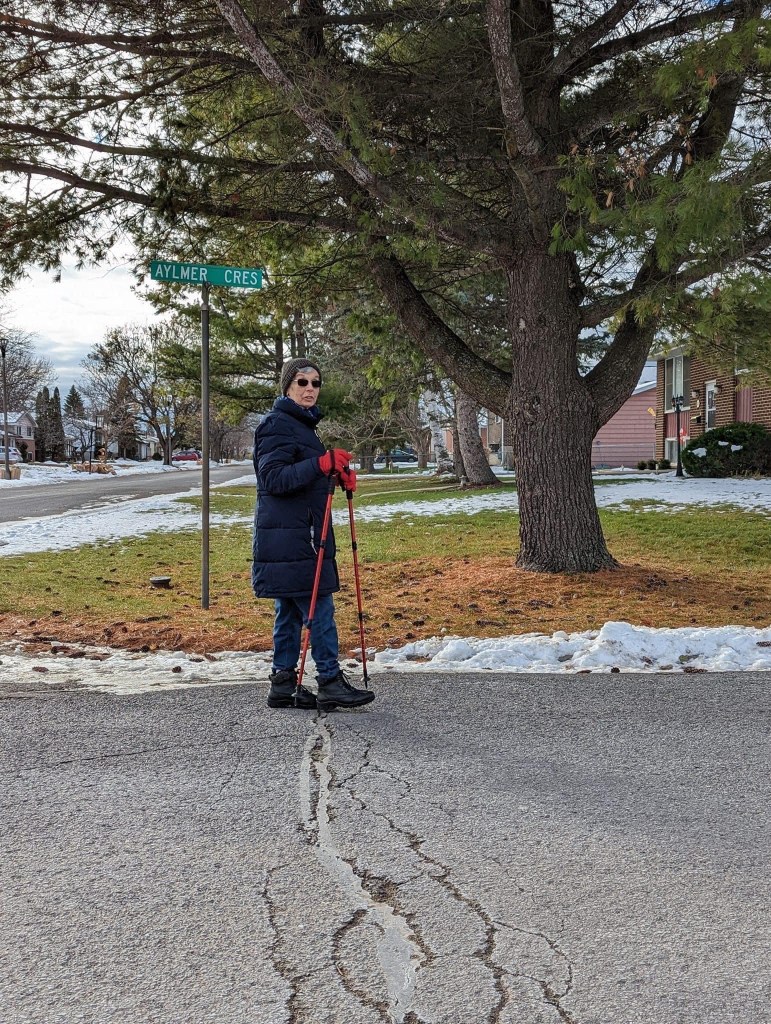
Mom taking a walk about the subdivision last year on her birthday. My parents have lived in the same home on Aylmer Crescent since 1973. I was four when we moved in.
Mom thanked me for the gloves. “They’re very nice,” she told me. When I asked her how the GORP was, she reported that Dad ate it, which made me laugh — because of course he did, likely thinking it might taste like some sort of candy.
“That’s about right,” Mom would say. She’s always hiding treats from Dad, and I won’t say where because my dad might be reading this. But even that is a kindness — Mom watches Dad’s diet because, as I’ve heard her say more than a few times, “Someone has to.”
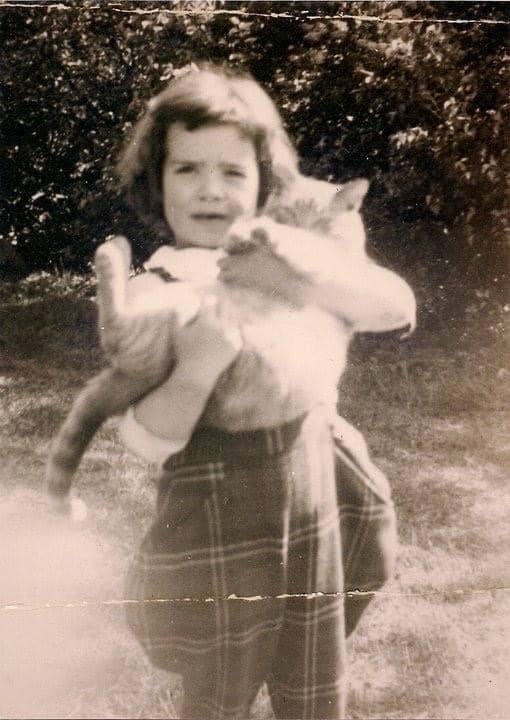
Mom as a girl. The cat was named Strumbus, she’s told me. Mom’s always loved cats. Apparently, Coco Channel, back in the 1920s, was one of the first women to wear jodhpurs “for fashion reasons rather than riding practicality.” That according to Horse & Hound. I love my mom’s jodhpurs here. They reflect her playful spirit. My mom with her mom in West Ferris in the 1950s. My Gram Chapman (Lula Chapman) raised mom on her own and, come to think of it, she was one of the kindest people I’ve ever known. Clearly Mom learned from a very good teacher.
I adore this photo of my mom and my grandmother. The happy, loving look on my mom’s face, gazing up at Gram. I find it difficult to read my grandmother’s expression. Photos are like that; they catch us at in-between moments. But I’d like to think she looks slightly bemused, patient, and content. It’s no surprise she was wearing what looks like a very practical coat. Practical shoes, too. Since she walked everywhere. My Gram Chapman was an exceedingly practical woman. As a single mom in the 1940s, she pretty much had to be. Frugal, hard-working, practical. She was always very generous, too. Astonishingly generous, I would say.
And in my Gram Chapman’s face here, I can see my mom’s. Which makes me smile and warms my heart. We do tend to live on in those we love.
The one neat thing Mom’s told me about this photo is that one her aunts put her hair in that very long braid. (Or maybe two long braids.) Her Aunt Dodie, I think it was. (She’ll correct me later, if I’m wrong.) “She was always doing things with my hair,” Mom told me. “Braiding it and styling it different ways.” Which makes me think that Mom’s aunts doted on and adored her, like she was the charming little princess of the family.
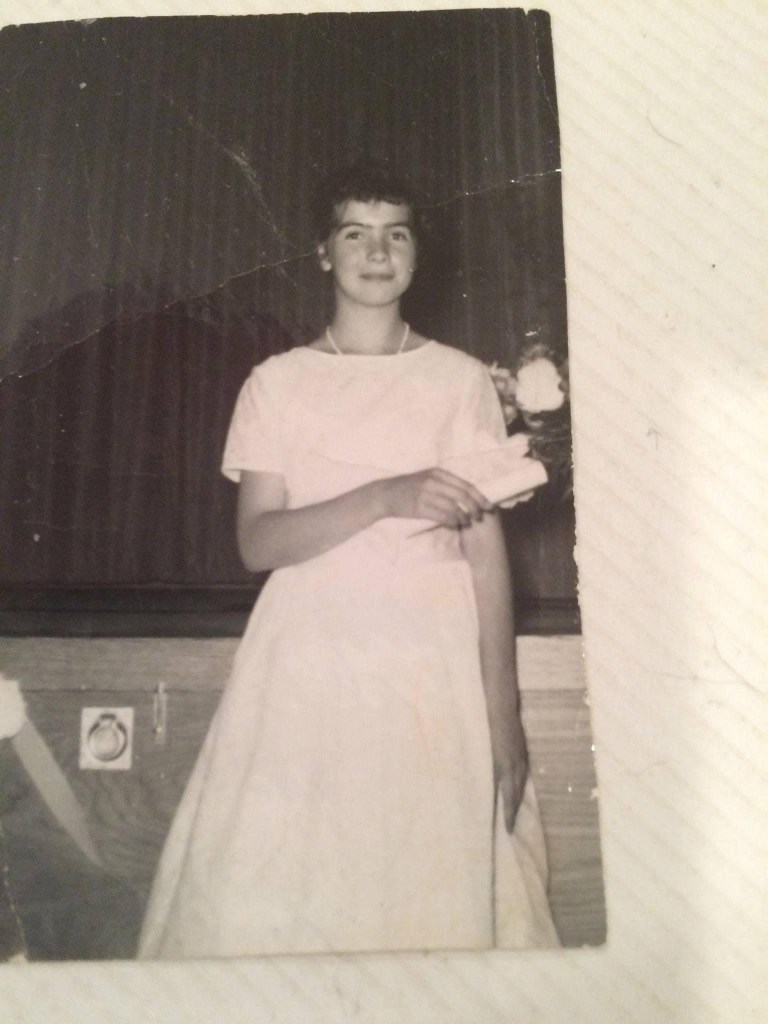
Mom at her eighth grade graduation, pretty, smiling, hopeful.
It’s impossible for me to look at this photo and to not think that my mom, at this age, would have been so much fun. Happy and playful, perhaps, as she so often is now, and has been for years. Likely all 78 of them.
On her 18th birthday, Mom will never forget, President Kennedy was shot and killed in Dallas, Texas. “They let us out of school,” Mom’s told me. “People were crying. No one knew what to do. It was such a sad day.”
I can only imagine. I could be wrong, but I seem to recall Mom telling me that Dad — they’d met in high school — brought her a cupcake at day’s end to cheer her up.
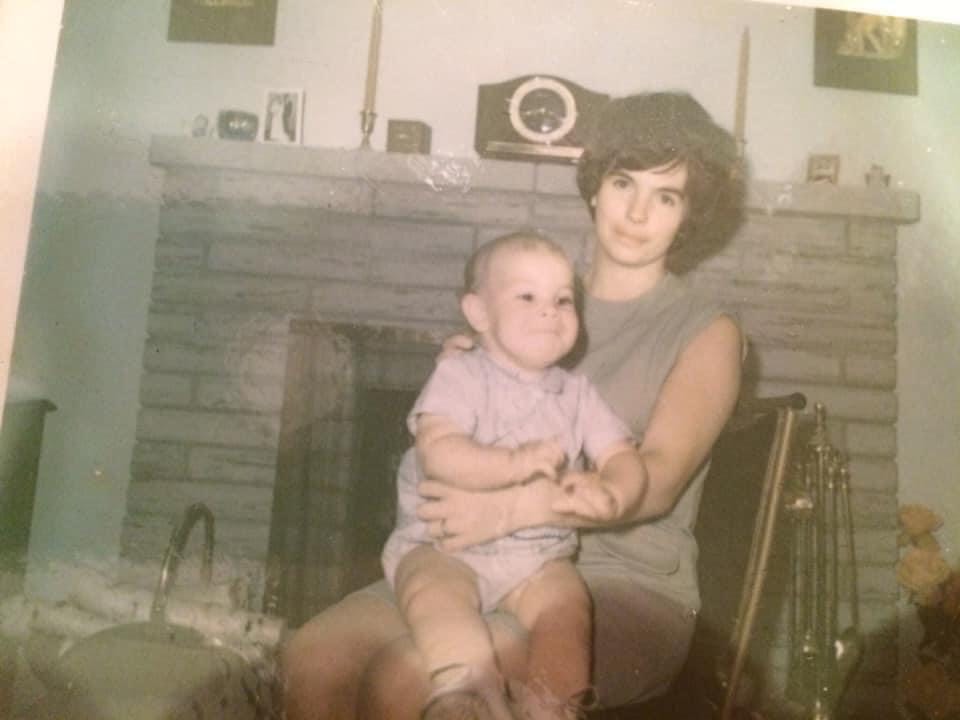
Mom holding baby me. I was a large baby. Sorry, Mom!
This photo was taken in North Bay, where I was born. I was a fat baby, Mom always reminds me — ten pounds, eleven ounces. Some of the nurses at the hospital in North Bay nicknamed me “The Football Player” evidently, a fact I still find rather charming.
I was born late, too, and Mom will remind me of this whenever I happen to be late for something. I was stubborn, she says, before I was born.
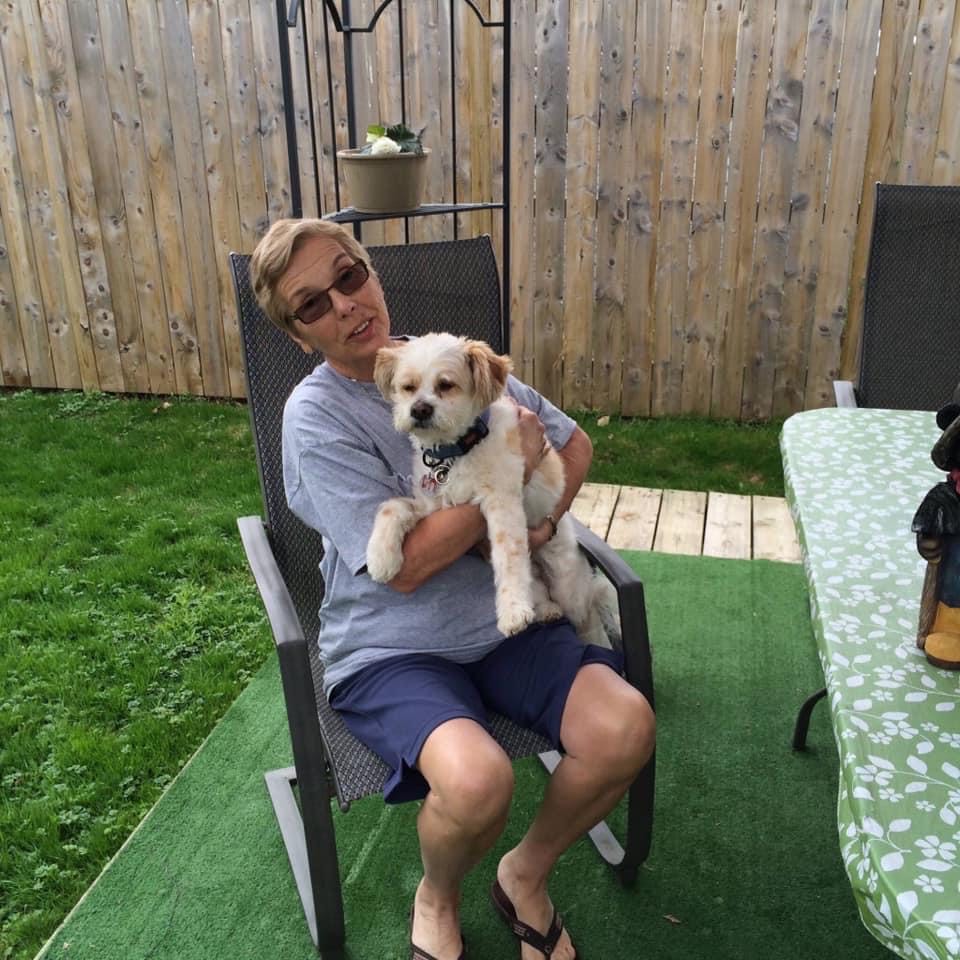
Mom holding Mickey, one of the sweetest dogs you’d ever wish to meet. My parents were vacationing in Florida — at a trailer camp they really loved — and missing a dog, Mom adopted Mickey. He was a tiny puppy, I recall. Looked a bit like a toy. But was so adorable. And thankfully, he had a wonderful temperament. He lived a long and happy life, a loyal, loving sidekick.
Mom is relaxing with Mickey on their backyard deck, in this photo. So many wonderful childhood memories from that backyard. When my sister and I were still kids, we went to Disney in Florida one Christmas. Dad drove us all down in our big blue whale of a Ford. One day at toll booth — they were everywhere, it seemed — Dad rolled down the window, chucked some coins in the receptacle, but when he went to roll up the window … well, the window wouldn’t budge. We drove to some town off the main highway, maybe in Georgia, I can’t recall, found a place that could fix up the window — and with Dad cursing our misfortune and telling us how damned expensive it was, we sat out on a picnic table and gorged on a bucket of Kentucky Fried Chicken. Strange thing I recall is it came with mashed potatoes and not French fries. The deeper south we drove, the more we understood just how much Americans were fond of mashed potatoes — and gravy. Man, they sure did love their gravy. Biscuits, too. And tater tots. By the end of that vacation, we were all fairly sick of tater tots.
Anyhow, this story relates to our backyard. As memory serves, Dad gave my sister Liz and I a choice: we could put a pool in the backyard, or we could spent Christmas at Disney. This was in 1978 or 1979, I think, so I was nine or ten, and my sister just two years older. There wasn’t much of an argument for the pool. We went to Disney.
Later in life, I’ve said to my dad, “You know, I wish we’d decided on the pool. I guess when we were kids we weren’t very forward thinking.”
And I think both Mom and Dad agreed that, no, we were not. Still, that trip was a blast!
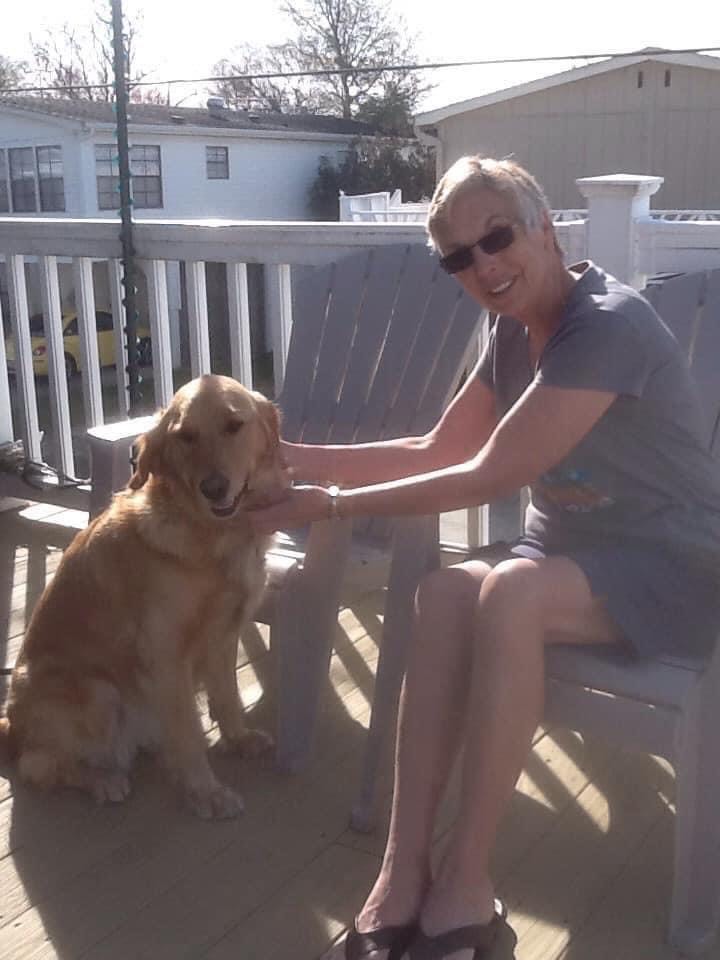
My sister’s dog, Gracie, with my mom, at a cottage in Myrtle Beach.
Once they’d retired, Mom and Dad spent a few months every winter in Myrtle Beach, and they loved it. They would rent a modest cottage near Seaside Resort, and Mom would walk their dog, Mickey, all over the place — down the beach, into town, around the neighbourhood, while Dad had a special spot for Mickey on the golf cart they got to drive around; it came with the cottage rental.
My sister and her family would visit, if they could, and this photo was taken during one of those drop-ins.
Mom is like a dog whisperer, I swear. They all just love her, and she loves them. The same is absolutely true of cats, too. Strumbus might have been the first cat Mom ever loved, but he certainly wasn’t the last.
When I was away at college studying journalism, Mom took care of my cats — all three of them! Sammy, Riley, and Macon. They all adored her. Macon was one my dear friends in this life, it turned out. After I graduated, he came to live with me again and we were thick as thieves, and Macon, a big black gentle bear of a cat, was just fine every time we moved. He was happy everywhere we lived — Kingston, Westport, Perth. He liked the houses more than the apartments, I would wager, because he had lots of space outdoors to roam, and he didn’t really need a leash or a harness, as he never wandered out of view. Macon lived a long, happy life. Nineteen years we were together. The best of friends.
It likely won’t surprise anyone to hear that Mom adored Macon, and he adored her too. Mom knows how much Macon meant to me, and that I still miss him, very much. She’s always happy to see photos of him, to hear stories. Macon was absolutely a beloved member of our family. That my mom appreciates this — and doesn’t think it silly when I say such things, and I do — is part of her kindness.
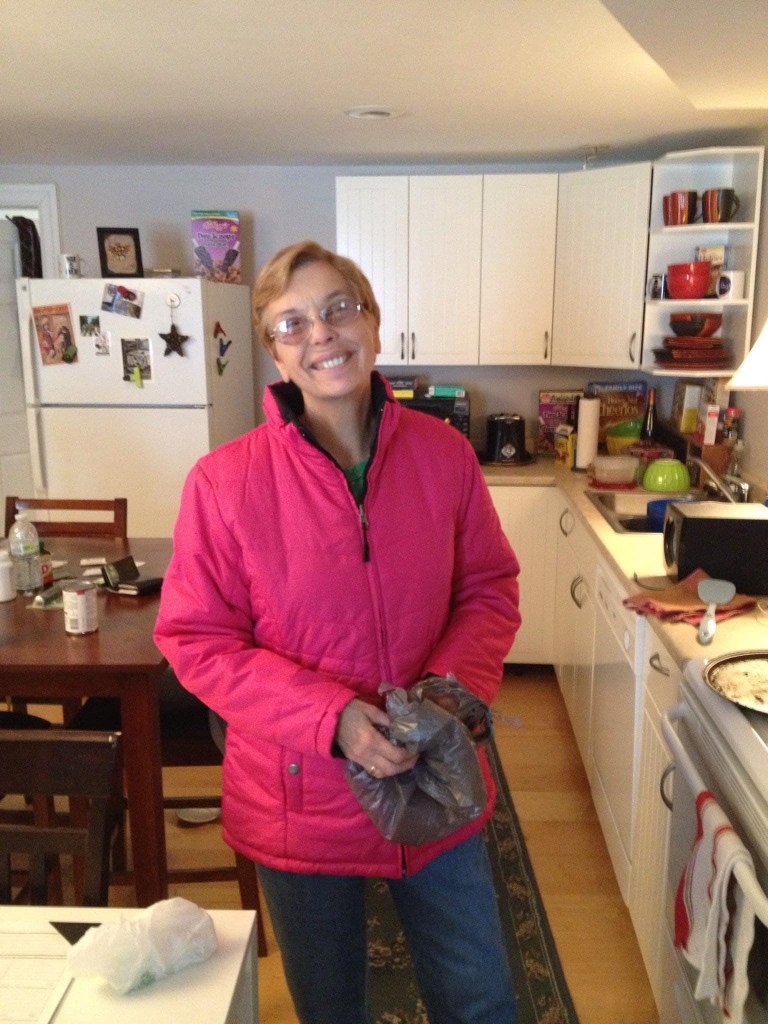
Mom, all smiles and pretty in pink, at my apartment — very likely having brought me something delicious to eat. She still does that.
Yes, Mom still makes me delicious meals, from time to time, and brings them down. Sometimes she’ll see something that needs cleaning, and she’ll just go ahead and do it. Really, there’s no stopping her.
She’s comical about it. “Your maid’s off this week, huh?” she’ll say.
That one is burned in my brain.
In the last two years, I’ve had some major health issues. Trouble with mobility and such. To help, my mom is forever picking things up for me. When she grocery shops, for instance, she’ll ask me if I need anything. If I do, she’ll pick it. Then my parents will drive it down and drop it off, at some point, and I’ll pay them back. They’re both very loving and generous, and they don’t really think twice about it. Sometimes they’ll pick up something for me without telling me. Something I normally need. Or once in a while, a treat — a burger and fries from Harvey’s. That kind of thing.
My apartment can get a little untidy at times, too, because it’s difficult for me to clean it. Mom’s paid for a cleaner to come in, more than once. And that is the sort of gift she’s prone to give. Ones that matter. Ones that show you she cares, and she’s paying close attention.
She always has.
Well, today, on her 78th birthday, it’s our turn to treat Mom. Dad is taking her to Swiss Chalet for lunch. I reminded Mom the Festive Special is on the menu at the moment, but she says she’ll just get what she likes — plus pie. Today calls for pie.
Coconut cream pie, she told me. Her Aunt Marion’s favourite.
A quick look back at a “bird course” I took in high school, and understanding that some lessons take years to sink in
Back in high school I took a course called Bachelor Living.
Poor, dear Mrs. Hearn was our teacher — and I shake my head and roll my eyes now thinking of all the nonsense she had to deal with from a classroom of silly, hormonal teenage boys, who were far more interested in eating ice cream straight from the container and whipping each other with tightly rolled-up dish towels than learning anything, at least in that class.
And what did we learn? I remember we were meant to sew, cook, and plan a budget. But oddly, I don’t remember sewing anything. There were sewing machines in the classroom, I think. And we were likely shown hot to sew a popped-off button back onto a dress shirt, but for the life of me, I can’t recall doing it.
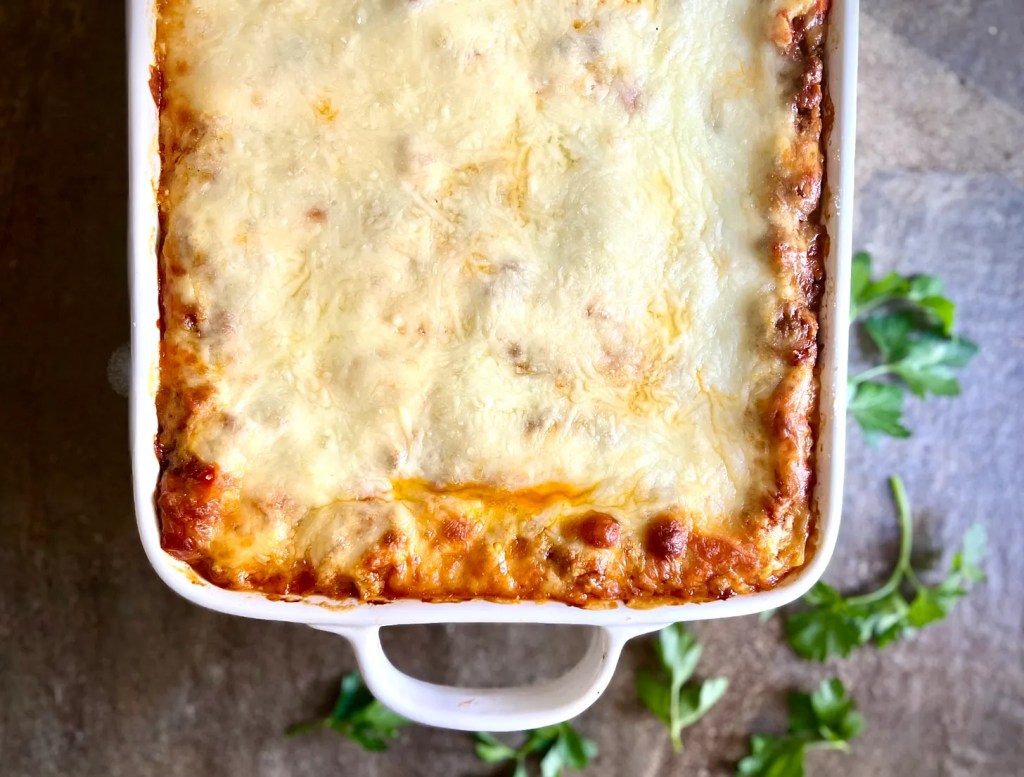
What did we cook? Lasagna comes to mind, for some reason. Likely because that seems like an easy dish for even the most hopeless bachelor to make, and one good for leftovers for a few days too — quick, tasty leftovers surely coveted by bachelors the world over. Again, I’ve no recollection of actually making lasagna though. Which saddens me. What on earth did we actually do in Bachelor Living?
Well, I do recall having a binder for this class, and one day filling out a weekly or monthly budget. This was an assignment. We were given a handout, I think, and we had to fill in how much money, given a certain income (likely a sum we thought enormous!), we would spend on rent and groceries and clothes and entertainment, and so on. Did we budget for rent or a mortgage payment? You know, I think I recall well that what we budgeted for was rent. Bachelors rent apartments, I guess. That’s what we were being told.
Still, even this assignment I remember not taking very seriously. I mean, what did it matter? It didn’t, really. Not to me. Not then. And I’m confident I put down some ridiculous amount to spend on entertainment, whatever that might entail. I was buying records and going to concerts and parties, at the time, would I still be doing the same thing as a grown-up bachelor? I had no idea. Nor did I much care. It all seemed fairly silly.
Bachelor Living was what we then called a “bird course.” Which, I suppose, meant even a bird could pass the thing, and really that was the goal. To not think too hard. Have fun. And pass.
I can’t help but think Bachelor Living was an odd vestige of the ‘60s or ‘70s, back when kids went to “Civics” class. Or maybe that was the back in the ‘50s? At any rate, in the early 1980s, when I was in high school, the course stood out as an odd duck.
Now that I’m fifty-four, though, I can actually see the course being of some use. Although, if I were teaching it, I’d have the students — and this was a classroom of guys, back then, all guys — reading useful, practical books like A Grief Observed by C.S. Lewis or Pema Chödrön’s When Things Fall Apart. Books about the hardships a bachelor might face later in life. Lewis’s slim book would have been perfect, come to think of it — he was, after all, a bachelor for a great many years before he found love quite late in life. And yes, he came to know the pleasures of love and marriage — that great feast of love, as I’ve heard some writer call it, although he wasn’t afforded much time at the table; the “banquet” was cruelly snatched away from him after a very short time. Even if we weren’t old or mature enough to appreciate the beauty, terror, and rawness of A Grief Observed, we’d surely have remembered it and perhaps come back to it later in life.
Or a grim, gritty, and sometimes amusing book about growing up, like Tobias Wolff’s beautifully written memoir This Boy’s Life — that would have gone over quite well, I think. It is brilliant, eloquently written, and entertaining, after all. Yes, that might have held out attention rather well, back then. And my guess is even our poor, dear Mrs. Hearn — and she truly was quite a lovely teacher, doting and patient and motherly — would have enjoyed reading that book.
I just thought of a snippet of lyrics to a song I loved back then. These ones from John Cougar Mellencamp’s “Check It Out”:
Goin’ to work on Monday (Check it out) Got yourself a family (Check it out) All utility bills have been paid You can’t tell your best buddy that you love him
It’s that last line that strikes me. It just popped into my head, thinking about my high school days. And it makes me wonder: Why didn’t we learn about the importance of male friendships? How to develop and nurture those friendships, and how to be open and honest with our feelings? Quite seriously, this sort of thing is vital to a bachelor, at any stage in life, really. It’s vital for all men, I would argue. Married men, too. I think just talking about male friendships, about expressing deep feelings and emotions, would have been of tremendous value. And if only a handful of kids took it seriously, that would be enough. It would have been worth it. And we sure did like talking about song lyrics back then.
At the time, I took no lessons from that Bachelor Living class. Not really. None that I was aware of, anyway. We all passed, and flew off like birds, I suppose. But now that I think back on it, maybe I did learn something, lessons that just took many years to understand. Simple ones, like: Be kind to your teachers. And, sure, have some fun and enjoy the free ice cream, but if someone is teaching you how to make lasagna, listen up. (A good homemade lasagna is a delicacy!) And it’s almost a life certainty that you will one day need to sew a button on a shirt, so be thankful when someone shows you how, and pay attention.
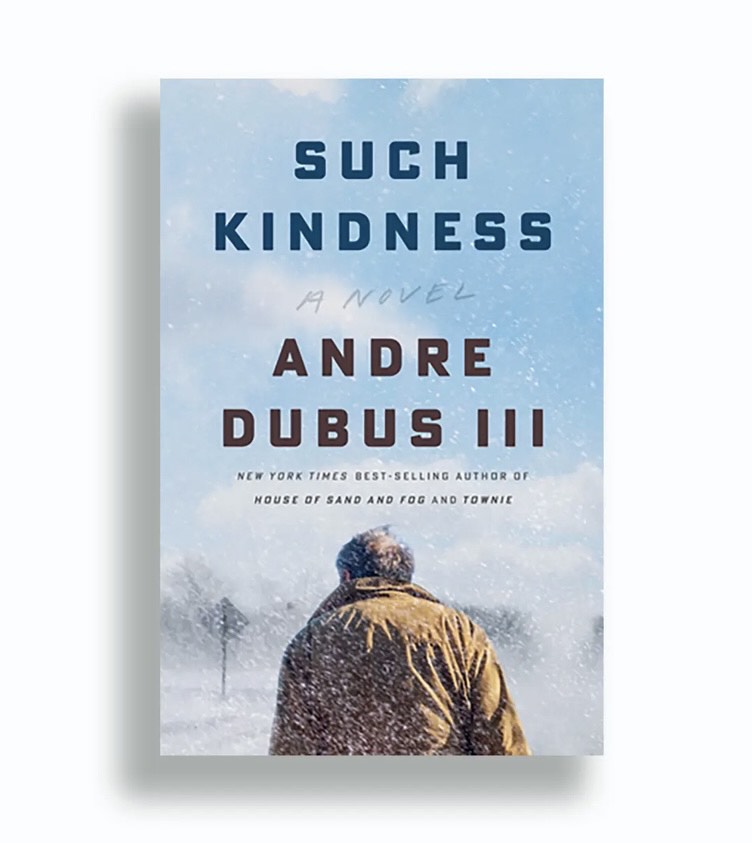
In his latest book, Andre Dubus III writes about physical pain, poverty, addiction, despair … and redemption
I’m a slow reader. Normally it takes me a couple of weeks to read a 300-page book. On the rare occasion when a book has me spellbound from the get-go, I’ll gobble it up in a week. Tops. I read SuchKindness by Andre Dubus III in four days.
That’s as close as I’ll get, these days, to reading a book in one sitting.
And to think: I’d come across the book by chance, really. One October afternoon, I was browsing the new fiction hardcovers at Novel Idea Bookstore and picked it off the shelf, for some reason. It wasn’t face out, so the cover art hadn’t hooked me. But this bit on the front-flap synopsis caught my attention: “A working-class white man takes a terrible fall,” I read — and then came the realkicker, “In constant pain, addicted to painkillers at the cost of his relationships with his wife and son, Tom slowly comes to realize that he can never work again.”
As unpleasant as it might be to read about a man in constant pain, something told me that I should, because I’m in constant pain, and maybe, just maybe, this man’s story might somehow help me — although I couldn’t have told you exactly how I’d hoped it might.
Although Ann Patchett’s back-flap blurb intrigued me, too. “SuchKindness,” she wrote, and I read, “charts a remarkable rebirth, not from poverty to wealth but from bitter helplessness to the knowledge of self-worth. The result is a gripping and transformational journey toward kindness, in a tremendously moving novel.”
In recent years, I have felt bitter and helpless. Mostly because of pain, and the trauma of loss. I’ve also come to value genuine kindness. In reading Patchett’s words, I felt a warm swell of hope.
That was just enough: I bought the book, and I’m mighty thankful I did.
* * * * * *
When we first meet Tom Lowe, who narrates SuchKindness, he’s lost just about everything. Everything that matters to him, anyway: a wife he dearly loved, a son he was devoted to, and the beautiful dream home he built for them — with a wall of windows and an open view of a saltwater marsh, where the “air smelled like pine needles and the ocean.” He’s lost his career as a carpenter, too. This happened in an instant. His mortgage had nearly doubled, and he was working wearingly long hours to keep up — until one day, while shingling a roof, in a moment of fatigued inattention, too much sunlight in his eyes, Tom fell three storeys and was irreparably, severely injured. Surgeries followed. Yet, now — years later — Tom’s still in constant pain, living in subsidized housing, and addicted to cheap vodka, or, as he calls it, his “liquid pain distracter.”
In the book’s opening pages, he recounts: “I have spent many hours contemplating pain. Its constant presence seems like a dark joke, really. Like the bully at school who sits on your chest and spits on your face years after both of you have moved on. My pelvis and hips were fractured years ago. Do they have to keep spitting in my face?”
If you’ve had an injury and suffer chronic pain, you’ll know just how spot-on this analogy is. Pain is a relentless bully. And if Tom comes across here as bitter, it is an arguably justifiable feeling. After I read those words, I felt deeply for Tom.
He is, after all, a good man. And we glean this early on, even though when we first meet him he’s stealing his banker’s trash hoping to find a “convenience check” from a credit card company. He’s desperate, yes, and living in Section 8 housing, but Tom was a once successful carpenter who loved to build things. He took great pride in a job well done, but is now unable to work. After his accident, he got addicted to opioids, at the cost of his relationships with his wife and son. But he’s kicked that habit now. And what he wants most is to see his son, Drew, who is about to celebrate his 20th birthday.
Trouble is, Drew lives on campus in Amherst, a hundred miles west and Tom’s car has been impounded. Why? Because he drove his neighbor, Trina, to a lab so she could sell her plasma to make rent, and he was ticketed by a young police officer for driving an unregistered, uninsured vehicle and (because he left his empty wallet at home) for driving without a license. The fines add up to $1,637, and Tom has no way of paying them. His income is meager. He receives monthly disability checks and E.B.T. cards, which he sells for cash to buy toilet paper and the cheap vodka that helps quell the red-hot pain caused by the screws in his hips. Most of his groceries come from a local food bank.
Deftly, Dubus avoids making Tom out about to be a “sad case.” Instead, he depicts Tom as a man who loves his son and wants only to visit him on his birthday — seemingly, at this point, Tom’s only glimmer of hope. Much of the time, it’s true, he is in terrible pain. He lies on a slat of plywood over the cushions of his couch and drifts into pain- and alcohol-induced dreams and remembrances of days gone by (both good and bad). And he doesn’t feel like he belongs in subsidized housing. His neighbours are loud, foul-mouthed, sometimes violent characters. In contrast, in his many recollections of a time before his devastating accident, we see Tom living in a warm and comfortable home, a hard-working tradesman, a proud, caring father, and a husband fortunate to have a smart and beautiful wife, who once loved him very dearly. It’s easy to understand Tom’s dizzying sense of dislocation.
Shortly after he’s hatched a plan to commit credit card fraud, Tom has a change of heart. He just can’t do it. It’s wrong, it’s dishonest. Not so long ago, after all, Tom was a man who believed in earning honest money through hard work. He’s bitter toward the banker who trapped him in a disastrous subprime loan that cost him his home, yes, but, in the end, Tom can’t steal from the man. WasIreallygoingtobeathief? he asks himself.
No, he wasn’t. “Which is why I need to sell the only valuable things I have left — all the tools left in the basement of my unit,” he thinks. “They took me years and years to collect, buying one or two at a time but only when I needed them … The truth is, I should have sold them all years ago. But if I had, it would be like selling the last of my once-toned muscles, my genitals, my very bones — broken or not — my brain and hands that, together, still knew how to do so much constructive good.”
This decision feels vital. A change in mindset. Possibly a first step toward transformation. Those tools were instruments of a noble profession, after all, and now Tom’s willing to part with them. All to spend time with his estranged son. We sense a sort of letting go.
An unsavoury neighbour takes photos of the tools for Tom, and Tom posts them for sale on Craigslist. When he quickly finds a buyer, he’s filled with gratitude. “Three thousand two hundred dollars,” he thinks. “I’ll be able to get my car back and still have twelve hundred left over. I picture myself taking Drew and his closest friends out to the nicest place in Amherst. A steakhouse, maybe, some low-lit establishment that serves juicy prime rib on thick platters. I picture myself being able to rent a room for the night in some B&B under pine trees, me and my son sitting on the porch drinking coffee or tea. Drew’s turning twenty and it’s time that I told him a few things about this life, something that might truly help him.”
Tom’s jubilant. And it’s impossible not to feel good for him. But before the buyer’s arrive at Tom’s apartment, he is shocked to find his tools have been stolen. Dubus is a skilled novelist; he telegraphs nothing, so this loss comes as a shock to the reader, too.
Andre Dubus III (photo by Silja Magg)
Tom is gutted. He’s pissed off, too. But he doesn’t own a phone. Barefoot, wearing a T-shirt and khakis, he walks into Dawn’s Hair & Nails, tells the owner he’s been robbed, and she lets him use their phone to call the police. The police can’t do much over the phone, they tell him; he needs to file a report, in person.
He marches home, puts on some half-decent looking clothes so that the cops don’t think he looks poor and disabled. He pulls on socks and work boots, and puts on a wrinkled button-down shirt and a never-worn sweater, possibly a long ago gift, “tiny decorated Christmas trees across its chest.” He shaves and combs his thinning hair, to “look more like a citizen.” The pain in his hips is raging; he feels like a “broken-boned dog.” Andcantheyreallynotsendafuckingcruiserover? he asks himself. Angrily, he trudges on foot to the police station, a mile across town, maybe two.
This short scene is superbly written. Every character we encounter is real and recognizable, although, as in life, not always predictable. Dubus portrays each convincingly, with pitch-perfect dialogue and eloquent, easy-flowing prose. He possesses the rare and remarkable ability to understand people from all walks of life — the poor, the middle class, rich bankers, thieving drug addicts, goodhearted shopkeepers, workaday cops.
At the police station, Tom is agitated, breathless, sweating, his hips engulfed in pain. A young policewoman takes down his information and, after he requests it, kindly brings Tom a Styrofoam cup of water. He’s grimacing, and the officer asks him if he’s all right. “No, I’m not,” he tells her. “I need to lie down a minute. Is there a place I can lie down?”
The station officer lets him lie down on a steel bench in a holding cell. A bit later, she offers to drive him home. Home, Tom struggles to get out of the cruiser, and the officer offers to help him getting to his unit. She rests one hand on his lower back. To Tom, it’s a lovely feeling. The officer is sincere and kind, and Tom is moved.
Whenwasthelasttimehefeltsuchaffection? I wondered. When you’re poor, disabled, and alone, lack of human touch can be common, unpleasant, emotionally wearing. Many of us know this firsthand.
Not long after this, Tom learns that Larry, the friendly, happy-go-lucky gentleman who owns Larry’s Liquors has died. The affable shopkeeper had always been nice to Tom, and Tom genuinely cared for the man. At the funeral home, Tom feels wrapped in a strange sense of peace. He also feels a certain clarity about two things: one, he’ll probably never get his car back, because, two, he’s not willing to be the kind of man who knowingly hurts others to help himself. It would be a foolish way to live, he thinks, “grasping at dollars and coins when one day our hearts will stop as finally as Larry’s has.”
Tom has softened. He says some very kind words to Larry’s widow, and she thanks him, remembering his name; he feels buoyed by this, perhaps he’s actually helped her in some way. To Larry’s daughter, Tom says, “Your dad will always watch over you.” He rests a hand on her shoulder. She wraps her arms around him and cries into his Christmas sweater. Tearfully, she thanks him. Leaving the funeral parlour, he feels an uplifting sense of virtue. He asks a stranger if he can borrow his cell phone to call a taxi. Just like that, the man says, “You bet.” And Tom thinks to himself: “It’s hard not to feel that I’m in the heart of some kind of higher lesson I should’ve learned a long time ago.”
This scene is about halfway through the book. And there’s a noticeable shift in tone. Tom no longer feels like a helpless victim. He’s come to accept some painful truths. And he’s kinder to people, more open and honest, with a genuine generosity of spirit. And then, one by one, good things begin to happen for him. Small things, perhaps — compassionate gestures, a sincere and thoughtful word or two — but one’s Tom is mindful are really quite profound and beautiful. His kindness is met with kindness. People react differently to him, and he likes it. More importantly, he appreciates it. And his bitter feelings begin to fall away.
In one particularly poignant scene, Tom returns to the hair salon and asks the street-savvy owner if he can use her phone again. It’s his son’s birthday, he explains, he needs to call him but has no way to contact him. Dawn, the shopkeeper, is slightly wary of Tom at first but quickly recognizes he’s a good person in a rough spot. She kindly lets him use her cell phone, dialing for him, even phoning 411 to get several numbers that Tom doesn’t know. He’s in severe pain, too, so she lets him lie on the floor of the salon to rest. While he talks to his ex-wife and then one of his son’s roommates on the phone, Dawn makes him a coffee.
Suchkindness, Tom thinks.
“Were you a good dad?” Dawn asks him, a bit later.
“I was before I got hurt,” he tells her.
Before the accident, that is; with a smile, Tom adds, “And the foreclosure and the divorce and … the painkillers. I got hooked on those.”
Before he leaves, Dawn calls him “hon.” And he’s touched. Tom describes the feeling: Thewordhangsinmyheadlikeavotivecandle, itsflameburningsteadily.
This happens every day: a person feels so disconnected from other decent people in the world, that one act of affection, one tender word, can serve as a powerful reminder that they belong. It’s one small moment of kindness. But it matters, it’s meaningful.
These “small,” accumulative moments of kindness continue throughout the novel. Though they surprise and delight, there’s nothing at all mawkish about them. We recognize them as things that happen in life. And who ever can say why? Are people innately good? No, not all. Does kindness always breed kindness? Not always, of course not. In SuchKindness, these moments are allowed to be. And they fill Tom with more of that uplifting sense of virtue he felt at the funeral home.
SuchKindness is a magnificent, powerful, and profoundly human novel. It’s beautifully written and skillfully structured. Dubus understands people who have endured tremendous pain and loss, and he’s able to portray life’s cruelties, and his characters’ reactions to them, compassionately, with a deft and delicate touch.
Reading the final third of this book, I was nearly shaking — with anticipation, fear, and, most of all, hope. I identified with Tom’s physical pain. I was in a great deal of pain, in fact, much of the time I read the book. And I know what it’s like to lose the person you love most in the world, too — the agonizing sorrow of being left, the helpless feeling of being abandoned. I genuinely cared for Tom. He felt real to me, a kindred spirit, and I wanted him to find contentment. Happiness. A sense that he was valued and loved.
I won’t spoil the end of the novel for you, but I will say that Tom eventually finds his way to his son. It’s one hell or an ordeal, his hobbled, humbling journey from a tiny apartment in Amesbury, Massachusetts to where his son goes to school in Amherst. And what he endures along the way would likely break some people. It’s truly astonishing that Tom doesn’t break — go mad, violently take matters into his own hands, or just give up. But he doesn’t. Instead, he is, again and again, surprised and overwhelmed by other people’s goodwill and generosity. He is truly grateful for these blessings, too. And by the end of the book, he is a freer, better soul.
Ultimately, SuchKindness is a story of acceptance. And holy hell, is it hard-won! Tom Lowe is a beautifully written character, one I’ll remember for a long, long time. For me, SuchKindness was a soul-stirring, life-changing novel. I suspect it will be for many. There are books that make us better people, and SuchKindness is among them.






 One Good Thing